Episode 10 · 5 February 2026 · 50 min
The Basics of Nutrition
with Brigid Fox, Integrative health and performance coach
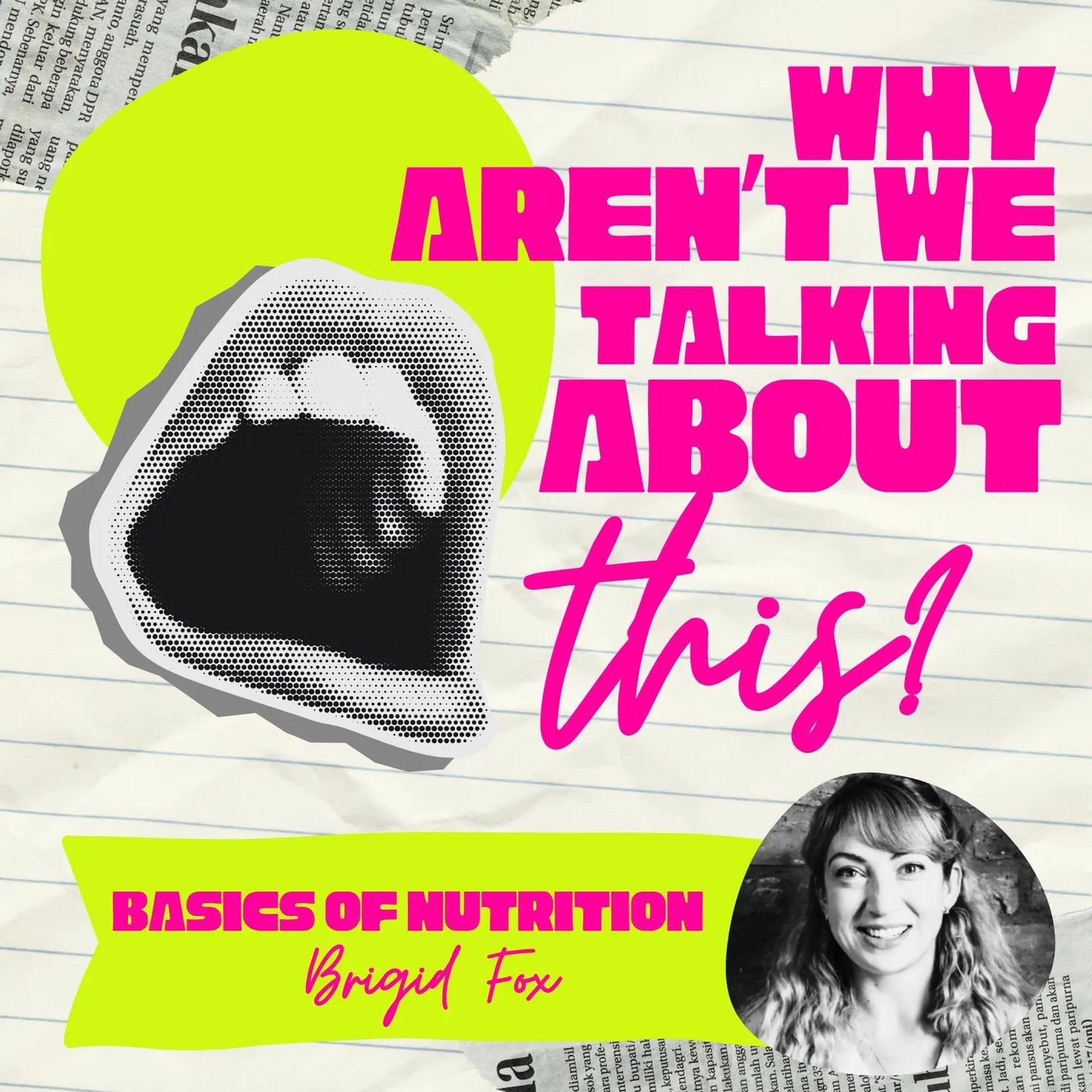
We're drowning in health information. So why don't we feel any healthier?
Integrative health and performance coach Brigid Fox cuts through the protocols, hacks and optimisation culture to return to the fundamentals: sleep, hydration, food, movement, light and rest. A conversation about knowing more but feeling worse, and treating health as a relationship rather than another thing to perform.
Core themes explored
- Cutting through protocols, hacks and optimisation culture
- Returning to fundamentals: sleep, hydration, food, movement, light and rest
- Knowing more but feeling worse
- Treating health as a relationship, not a performance
TranscriptRead +
Carly OsmanSo hi Bridget.
BrigidHi, Carly. Yeah.
Carly OsmanI'm really excited to have this conversation with you today, probably from a selfish reason. I've turned 41. I'm perimenopausal and I've been hit by everything coming through. like You should be eating more protein. You need to be exercising X many times. You need to be lifting this. They're optimized, like prioritize. It's just relentless. And I want to understand from you, actually, what should we be focusing on? Where should we be putting our attention? Like, how should we be really thinking about the basics of health and nutrition? So before we dive into this, I'd love to know, like, who are you?
BrigidYeah, who am I? So I like to introduce myself as a reformed technology executive. So I worked for about 12 years in the tech space as a sales leader, very high stress, very competitive, burnout central. And so actually one of the motivations for me to pivot careers into what i'm doing now, which is health coaching and nutrition, was just there were such high levels of stress related illnesses amongst my peers. I was watching people of age kind of 40 having major heart attacks. i was watching people in their 30s kind of get signed off with digestive issues, with cardiovascular issues. And so who am I? I'm the person that would like to help more people to be well without sacrificing their careers and their ambitions. And I do that as a health coach and as a nutritionist in training.
Carly OsmanI think it's so well needed. And I look around my peer groups, everyone is suffering from chronic stress. i I think about myself and I tend to flip between two stays, wired or completely exhausted and broken.
BrigidYeah. Yeah.
Carly OsmanAnd I don't seem to be able, it's one end of the pendulum or the other. It's there doesn't seem to be this constant. And that's what I really want to be focusing on this year and and then forever more. How do I get that balance where I just feel, i feel okay the whole time? So I want to start with the first question. like We live in a world where information is everywhere. We can go down rabbit holes, we can find out things. So there's no shortage of information. But yet, why do we feel so exhausted, burnout, unwell, endless symptoms left, and centre?
BrigidYeah. So I talk about this a lot with my clients. I think it's so important to remember that information knowledge does not equate to action and it being actionable knowledge. And I think also if we take a step back and we think about it, like we're living in a time where we know more about the human body than we ever have before. We have kind of science to thank for that. We have kind of scientific methods. We understand more of the complexities of our machine, if you like. But I think with that comes information overload. And also, i think it also means that the solutions that we come up with for being healthy are actually really complicated and confusing. And everybody kind of has a point of view. And I think when you couple the kind of growth and science and knowledge with platforms like social media, It means that we're surrounded by endless chatter about what works or the one thing or the 10 things you need to do. And it's just too much for the human brain to really cope with. But I think what we need to remember is actually the reason we're probably feeling really stressed out and burnt out and continuously well, despite all of that, is because we forget to tap into our self-knowledge. So one thing is knowing you know that maybe the human body responds really well to protein intake and that we need it for, repair and everything else that that we use it for within our bodies is another thing to go, well, do I feel like I need to eat 10 chicken breasts today? or do I feel like I'm deficient? And I think what we've lost is this art of self-knowledge and intuition and tapping into what we need in the moment. and using that to determine what we actually do day to day. right I feel like we've outsourced our knowledge of ourselves to other people, to science, to wearables, to monitors, and we've kind of lost that ability to go, what do I need right now? What is my body craving? What is the best thing I can do for my health in this moment?
Carly OsmanI think you're spot on and I'm going to go again. Selfish case study of one here. I have done that completely. It's like, oh, what does my step count said? Or what is my, my ring thing saying, but it's not about me and like what's going on in my body. How do you get better at connecting with yourself and not living in your head? Because I'm assuming that's where I am right now, where I'm like science fact, this is what I need rather than actually how, how am I feeling?
BrigidYeah. Oh, my goodness. So I think this is one of the biggest challenges, where It's easy to sit here and go, we need to connect to our intuition. We need to connect to ourselves. But how do we actually do that? And I think, again, if we just take a step back, we live in a world that encourages us to be very cerebral. Like a lot of the work that we do is is kind of cerebral. It's no longer manual in the way that it maybe was 150, 200 years ago and and prior to that. We spend a lot of our time kind of focused at a screen. We barely even go in person anymore, right? So we don't have that physicality. And I think that has really encouraged us to kind of live in our frontal lobe and live in our minds. And actually, Without getting too political, I think the system, I think our economy needs us to be there. The economy wants us to be productive, it wants us to be online, it wants us to be thinking all the time. I actually think we've gotten to a point where we almost see our body as a bit of an inconvenience. Like our body gets hungry, it gets tired, it gets cranky, it gets achy, but we have this impression that our mind and could maybe go on forever if it weren't for for the physical sensations that we we kind of experience. so I think one of the most simple and effective ways to get back into your body is to do something which actually I do with nearly all of my health coaching clients, which is very simple. You put both feet on the floor and you sit and you close your eyes and you take 10 breaths and you try to notice where that breath reaches in your body. And then you try to breathe into your toes, into your ankles, into your knees, all the way up to your head. Because it's just about realizing that your body is still there. and unless you close your eyes and kind of zone out everything else that's going on, it's quite hard to actually feel your body again when we're kind of encouraged to be so much in our minds.
Carly OsmanAmen.
BrigidAnd actually something happens usually with with my coaching clients when they start to do this, which is they have a really strong feeling of like rejecting the stillness. They have a really strong feeling of like anger almost, like things come up that they're not really prepared to do, even just sitting for you know, 10 breaths and and feeling the breath and body. And that is a really good indicator that we are in our heads because when we finally give our body just a tiny little window to tell us, actually, there's some things you need to hear from me. We're kind of afraid of it, right? We're kind of like uncomfortable hearing that from our body. So i don't know if that fully answers your question in terms of like, how do we get back to our body? But I think it's a practice over time of just doing really gentle things You don't need to sit for half an hour and meditate. You don't need to you know go to a somatic class necessarily. But just that kind of reflex of going, OK, I'm going to spend a minute just breathing and seeing what comes up can be really, really powerful, especially if you're busy and just taking that between meetings or you know between sessions and activities.
Carly OsmanAs you're saying that, I feel really deeply uncomfortable.
BrigidYeah.
Carly OsmanWhat How do I get over that? Because I i understand what you're saying in principle, but the thought of just having that stillness where I've got nothing to do with listening to the voice. I mean, I've done some yoga in the past and just got very, very angry at the end of the class because things have come up.
BrigidYep. Yep. Yeah.
Carly OsmanI want to push down.
BrigidYeah
Carly OsmanHow have we got to this point?
BrigidI think because we have such comfortable lives, which sounds crazy because it's this juxtaposition of feeling stressed and unwell all the time, but also we really live in comfort and we distract ourselves from comfort. So yeah so many of the things I see in my health coaching clients that they want to work on are effectively strategies though that that they've built for numbing out any kind of physical sensation, but also any mental discomfort. So think about like use of alcohol, even just a few glasses in the evening, right? Just to kind of like turn our brains off and numb us out. caffeine and stimulants to kind of keep us going, sugar to give us the boost of energy. They're all kind of distracting us from actually going, okay, body is tired, probably needs me to take a 20 minute nap.
Carly OsmanThank you.
BrigidBut that's really hard because I'm working right now. So I'm going to override it. And so it's really natural to have a lot of anger stored. your Your body has kind of been screaming at you for a while and you are doing things to kind of shut it up. It's really normal that when you first start to kind of reconnect with your body that there's a lot of strong feelings there. I think the only way through is to sit with it and to continually practice it. And this is why, you know, at the beginning of every coaching session, I do this breathing exercise with my clients. By the end of a coaching program six sessions in, they're asking to do it rather than kind of like having me, you know, push them to do it if you like. But if you were to do this, say, once a day consistently set a timer on your phone and just try to do that, over time you get more comfortable with those feelings of discomfort and you will be able to let them go.
Carly OsmanIt's really interesting. What should I be looking for? Because you you touched on a couple of things. that I've been sober now for three years and I realized that I was using al alcohol as a numbing agent and I was using it to disconnect, disassociate and it was never an alcoholic, but I had a really great murky relationship with alcohol.
BrigidYeah. Yeah. Yeah.
Carly OsmanBut what I haven't given up is sugar and I have a regularly a three o'clock slump and I go for some sugar and I want to kick. What is my body telling me? If I was to do that breathing exercise, is it saying I'm tired? Is it saying i need something else or I'm deficient? What is it telling What should I be listening to?
BrigidYeah, great question. And I will say that I am six years sober in February, and I had a horrible transfer of addiction into sugar for quite a long time. So I do get it. I think it's so hard because I can't answer that for you. So I think a principle of health is, especially when we're talking about intuition and self-knowledge, is... Only you can kind of interpret your body signals, but it just takes time. It's like anything. It takes a bit of time and a bit of learning and a bit of kind of like just just trying new things. So, you know, a sugar slump in a the nutrition world or or a slump in the afternoon where you feel like you need a hit. could be associated with having had maybe something quite sugary in the morning for breakfast that's kind of set you on a bit of a glucose roller coaster, right? So it may just be that your body is going, whoa, like I had loads of glucose this morning, and now I don't. And now I feel like I need some more, right? It doesn't necessarily need the glucose. But what's happening is your blood sugar is dropping. And that's creating this feeling of, you know, we don't have enough to run on. eat some more, right? It could be eat some more. It could be fatigue. It could be fatigue. It could be going, actually, you know what? You've been working since 8am this morning. You haven't taken a break. we need something to get through this afternoon because you're not going to take a nap. We know it. But I can't answer that for you. And I think part of the practice is actually sitting with it, figuring it out and learning the language of your body because we're just not taught that. But someone else can't tell you that. And I think that's the whole point is we we kind of want someone else to tell us, oh, is it about glucose? Is it about a magnesium deficiency? Is it about this? Well, sometimes we can help with blood tests and things like that. But a lot of the time, the answers are kind of within you and you you know that actually what you need is a break or you know, a meal that is made of whole foods that keep your blood sugar stable.
Carly OsmanThis is so interesting because my first reaction to everything is, okay, how do I outsource this efficiently? I just need someone to tell me X, Y, and Z.
BrigidYeah.
Carly OsmanI'm going to do all of the things and then there I am.
BrigidYep.
Carly OsmanBut I can't do that.
BrigidYep. Yeah, people can help. i think there's also a really important distinction, right? So there's a distinction between kind of your average person who is feeling a level of stress and burnout and maybe malnutrition and other things. And there's someone who's chronically unwell. And I think I want to be really clear, I'm not anti-science and I'm not anti-testing or or you know even kind of taking advice from professionals and doctors. Absolutely not. But for your average person, I feel like we could get so much, we could make so much progress with our own health and well-being just by learning to kind of understand the signals of our body. But then honour them, because it's one thing to kind of hear our body and hear, I'm tired. It's another thing to be courageous enough to say, I'm going to block out my calendar to take a nap because I'm tired and I know that I'll be more productive when I come back from it. And I think that's the difficulty, that's the kind of knowledge doesn't equal action. we have to be willing to take the action, even if it's an action that's maybe a little bit out of kilt with the way that we work and the way that we live.
Carly OsmanI want to change like tack slightly and talk a bit about the trends so what I'm seeing is sleep is becoming the number one thing everyone's talking about the benefits of sleep and the importance of sleep yet
BrigidYeah.
Carly OsmanAs a person, I have been conditioned deeply to think that rest is bad. I shouldn't be resting.
BrigidYeah.
Carly OsmanThere There is no way that I'm going to take a nap in the middle of the day, even if my body's screaming it, because I've been told, no, you've got to be to be a productive human. You've got to be on, on, on. You've got to be optimized. You've got to be efficient. do-a-oo-hda And what needs to change in order for us to actually go back to the basics needs of us as humans?
BrigidYeah, so much to unpack in that question. So first of all, I'm very happy. Actually, sometimes there are trends that come around like the fiber maxing and the sleep. And I'm like, yes, thank goodness. These are the basics. Everybody do them. And so the methods, i don't really mind how we get there, but we kind of need to get there. But I think what you're identifying is like, how do I take some great advice and make it reality? not just in terms of like making time for it, but in terms of the conditioning that we've had throughout our lives about what rest means, especially as women.
Carly OsmanYeah.
BrigidI think you know like we we're sort of conditioned that we should always be kind of doing something, serving someone, creating great Christmas experiences for them, et cetera, like we were talking about before before we started recording. And again, I think this comes down to asking a few questions of yourself, which is where does the belief that rest is unproductive come from? Who is telling me that? Who has told me that? Where do those messages come from? Do I fundamentally believe that? And then if you're the kind of person who likes an experiment of one, it's kind of observing, okay, I'm going to decide to rest. I'm going to take, let's say a half an hour break in my day, which I might not otherwise take. And I'm not going to do anything. And you might be feeling all those feelings of discomfort and everything else. But the the practice is what happens, what comes up, where do those beliefs come from? And it's starting to question that. Where does it come from? Who is telling me that? Who is watching? Who is actually judging me? Is it just me or is there someone else? So I think that is kind of like watching me. And I think when we start to interrogate that, We start to break it down and realize like this is a conditioning, but it's conditioning that we can move out of if we're willing to kind of do the work on it. So I think it's quite normal that rest is seen as unproductive because it's time that we're not spent doing things, especially if we're employed. you know, employers want to see that we're doing our eight hours, et cetera. But at the same time, we know since the pandemic that a lot can be done in a lot less time. And the four-hour working, sorry, the four-day working weeks are really showing that, right? so So I think we have to start interrogating where do these messages come from and sitting, again, with the discomfort of of what it feels like to rest until we get comfortable with it.
Carly OsmanThat's interesting. Is the same thing applicable to food? So I'm in a really weird place at the moment mentally because I i grew up in the 90s, 2000s where society was skinny as in and i have a bit of a warped, on a very warped sense of food and body image as a result of that.
Carly OsmanI thought I'd done a lot of work to get over that.
BrigidYeah.
Carly OsmanAnd then we've seen the onsets of GLP ones.
BrigidYeah
Carly OsmanSkinny's back and it's making me, and it goes against everything I believe, but it's still bringing up some really uncomfortable triggering moments that I'm finding.
BrigidYeah.
Carly OsmanDo I need to do the same kind of exercises there and to sit with it and say, why am I suddenly thinking of this food as bad? Why am I trying to restrict and control and go back into that space?
BrigidI think, yes, I think it is complicated with food though right because with food we have to eat so it's like one of those things where you know we talk about food addictions and cravings and things like that and it's really hard because you have to eat to sustain yourself so you can't stop eating it's not like stopping drinking or stopping caffeine or something like that and so you you have these kind of battles with yourself i certainly do maybe every time i sit down to eat is this the right thing is this the right amount of nutrients is this the you know, so I think part of it is interrogating those beliefs. But I think something more positive when it comes to food as well is kind of having a vision for yourself about how you want to feel, how you want to feel in your body, not look necessarily in your body, but how you want to feel and kind of like spending some time on kind of
Carly OsmanThank you.
BrigidOkay, if I reach that goal, what will I feel like? What will that mean? What will that mean for like my energy levels? What will that mean for my self-esteem? What will that mean for how I'm able to show up in my work or in my family kind of context or with my friends? And just, I guess, shifting the focus to kind of almost like the intentions that you have for your body rather than the goals that people might set around like weighing a certain amount or looking a certain way or fitting into a certain size. And I think that can be really powerful because when you start to set an intention around how you want to feel, then you can consistently kind of make a choice from a good place around what you're eating, what you're putting on your plate and how you're looking at other people who are maybe more focused on those kind of superficial aspects. It's hard, but like, how does how does that sit with you? Because I'm sort of seeing you kind of focus, but like, do you think that's realistic when you're kind of hit with media messages all the time?
Carly OsmanI think so. And I think it's reminding myself about my ultimate goal for my life. And I love this term health span and this focus much more on longevity.
BrigidYeah. Yeah.
Carly OsmanI want to get to the end of my life as a really old woman, basically running through chaos and just having best time possible.
BrigidYeah. Yeah. Yeah.
Carly OsmanI want to continue to be a strong for as absolutely and as mentally alert for as long as humanly possible. So that's my goal. So I think I need to then just keep reminding myself and actually It's not about deficit. And in order to do that, I do need to have the right amount of micronutrients and proteins and and all of this stuff that probably in the past i I had denied myself because it was about counting calories. And it didn't really matter what was going in my body as long as it was a certain calorific content to get me to survive. But actually, it's not about surviving. It's about thriving. And also, I'm going on a bit of a tangent here, but one of the things I'm seeing around the GLP-1s is the problem with malnutrition.
BrigidCompletely. Yep. completely
Carly OsmanAnd with that to me is terrifying.
BrigidYeahp
Carly OsmanAnd especially as a 41 year old perimenopausal woman, I need to be putting much more into my body and not restricting it in any way. So I'm, and this comes down to that self-belief and that self-talk going, I'm don't, i I've got to stop listening to the news and the media and and what these celebrity influences, that's not healthy. Healthy is me having a really It's having me having a connection with my body. So I understand what my body needs, but also looking at food through a lens of enjoyment and nourishment.
BrigidNourishment, nourishment, exactly, exactly.
Carly OsmanYeah.
BrigidIn noishment and and I love that because that image that you have of yourself in the future where you are running around as a kind of like older woman, maybe after grandchildren, you know, When you then compare, when you kind of think about that vision that you have for yourself and then you think about potentially taking something like a GLP-1, if you look at the evidence around GLP-1s, yes, there's very rapid weight loss. There's also very rapid muscle loss.
BrigidThere's also potential complications with regards to digestive function efficiency and kind of actually absorbing the nutrients that you need to be around to become a grandmother, right, and to be a physically active grandmother at that. And so then when you have that contrast, it's a lot easier to go, well, actually, that doesn't really fit with my vision for myself. Short term, it might give me a kind of physical image boost, but actually my long term goal is much more important to me. And again, I'm not anti-science. I think there may be use cases where GLP ones are at absolutely a great option for people who are medically obese and have really struggled for a long time to get into a healthy range. But I think your average person, it's probably potentially quite problematic. And we don't know the extent yet of the of the kind of the backlash of of side effects either. So I love that example, Carly, because that's exactly what we're talking about. It's having an intention for your life that then is the work of a lifetime. And you can forgive yourself for moments when you feel like you haven't quite done what you think you should have done because it's an ongoing kind of piece of work.
Carly OsmanYeah there's been a thing that i've been thinking about which is why have we normalized i suppose these chronic i don't know if they're chronic conditions i don't know scientifically if you call that but basically the overwhelm, wired, tired, all of that stuff is just kind of, if I want, it's the badge of honor.
BrigidYeah. Yeah.
Carly OsmanOh, I'm knackered at the moment or I'm in burnout. We're using these phrases and throwing them around. How have we got here and how do we pull back from there?
BrigidYeah, so this is a really, it's one that's really close to my heart because of the industry that I worked in. So technology, software sales, it really was even before like the pandemic, always on, always online, working across multiple time zones, traveling, you know, like it just, If you were resting, if you stopped, if you weren't responding to your emails or your phone, like you were not perceived as a high achiever, which is mad because actually some of the best performing salespeople would take their long holidays and they would take their time off to spend with their kids, etc. But I digress. I don't know how we got here in terms of it being a bad Giovanna. I will say I think that is starting to shift. I think that's very much something that like in the beginning of my career was was really insane. And I know we see also on LinkedIn this kind of like nine, is it nine, nine, six, nine, six? I can't remember. I can't remember the term, but basically like entrepreneurs saying that they'll work six days a week from nine until nine or something like that. And that's become a bit of a conversation. But I do think there are more conversations now about the alternative, which is working productively resting and seeing rest as part of your productivity. And I hope that trend continues. I really hope that trend continues because again, the data coming out of things like the four day work week, the examples that we're starting to get from senior leaders who are going, actually, it's really important to to take the time out and take you know a sabbatical or take a one month off to really rest and and think about my strategies for the next year I love those examples. And I think we're starting to see a bit of a sea change, but it will take a long time to trickle through. So not really an answer to your question, like how how did we get here? But I think I like to think that that is now shifting. There's certainly more of a conversation happening about it at executive level.
Carly OsmanDo you think then at more of a grassroots, we need to talk about it amongst friends as well to actually... Be the ones, because I do believe that sometimes you've got to be the change you want to see in the world. So actually talk to your friends and be like, oh you know what I've had a great afternoon.
BrigidYeah.
Carly OsmanI sat and I binged Netflix. I did nothing. And also... I'm chronically online and I have i an addiction to my phone and I'm going to be the first to admit that I'm truly addicted to my phone and I'm looking for that dopamine hit.
BrigidYeah.
Carly OsmanBut what I'm trying to do is have moments off. I've downloaded one of those apps that blocks things.
BrigidOh yeah. Yeah.
Carly OsmanI've downloaded it. I have not set it up. So that's my next step to actually put it on the phone. But I'm taking trying to take more of those actions in order to do that.
BrigidYeah.
Carly OsmanSo do you think we just need to all kind of collectively just take a step back and say, guys, no, we're living in a broken system where we're outsourcing everything to other people.
BrigidYeah.
Carly OsmanWe need to take more back accountability of our body, what we need and try and divorce from technology.
BrigidI do, because I think it can have a really, really strong impact. So for several years, I was working as a consultant, kind of freelance, my own business, still working within the tech industry. But I had decided when I built that business that I was only going to work maximum four days a week. I was always going to have Wednesdays off. Wednesdays were my day to do yoga and to do my admin and kind of do things in London that you can't do at the weekend without booking. And, you know, just like it felt like a real joy to have that day off And I remember writing a document that was about like how to work with me, and I posted it to my Slack profile so that anybody that was trying to get in touch with me could see, okay, this is how you best work with me. We a remote-first company, and we had the, I guess, the... the idea to make sure people knew how to reach you and kind of what your working rhythm was and things like that.
Carly OsmanThank you.
BrigidSo I wrote this document and it was like, I do not work Wednesdays. I won't respond on Wednesdays. Like you can't reach me on Wednesdays. You know, I work Mondays and Tuesdays and Thursdays and Fridays and I work between these hours. And if you need to book something outside of that because of a I don't know, a different time zone or something like that. That's fine, but contact me. We'll discuss it first. Don't put it on my calendar until we've agreed it, because I'll take the hour from somewhere else, because I was actually billing day rate, right? So I felt it was important to stay within the boundaries of that time. And it was so interesting, because all of these employees who were like full-time employees went, do you what, I'm going to put those boundaries around my time too. And all these like documents started popping up about best ways to work with me. Like, oh, I don't check my Slack during the day because I find it really distracting. So if there's something urgent, please call me. Or I will check my Slack first thing in the morning between 10 and 12.
Carly OsmanThank you.
BrigidFor anything important, please make sure you send it then. i probably won't check it in the afternoon. And it was great because everyone had their own different working style. But it was a way of creating structure around when they were online, when they were in focus time. and like personal time and really making sure that that was respected and i did it because i was a consultant but it ultimately caught on i think within that business how effectively it remained you know and was respected can't can't speak to but it certainly started a conversation about protecting certain times and for certain activities which was great
Carly OsmanI love this. And I love that you think about this and talk about this as part of your kind of overall health and nutrition, because it's all so interconnected. Your personal and your work, you are one person.
BrigidYeah Yeah.
Carly OsmanThey just happen to be in different functions and modes.
BrigidYeah, yeah. And I will say, this is one thing that I have really come to understand over the last few years, is that I'm an integrative health coach. I'm an integrative nutritionist. And what that means is we have nourishment on the plate, and we have nourishment off the plate. And the nourishment off the plate is so important and we forget about it. I think we're a bit obsessed with information about food and nutrition, like Guilty.
Carly OsmanThank you.
BrigidI have about a million cookbooks and I love learning about new things about food and the chemical compounds and the things that are great for us. But I'll be honest, if you're eating really well, but you're stressed to hell like it doesn't matter you may as well not be and we can talk about the mechanisms of stress on the body in a minute if you like but ultimately if you're not prioritizing social connections time off creative endeavors that don't have a purpose or a product productive purpose they're just there for like your enjoyment if you're not getting sunlight if you're not getting fresh air if you're not getting gentle movement a lot of the things around nutrition kind of won't really count. And so protecting the time that you have to do those things, I think is, is part of the battle.
Carly OsmanThat's so interesting. So it counteracts.
BrigidThe Yes, completely. And stress is the connector there. Stress is the connector for why nutrition actually can be really ineffective if you're not also doing these other things.
Carly OsmanSo let's talk about stress.
BrigidOkay.
Carly OsmanWhat we use this term a lot is throwaway again.
BrigidYes. yes
Carly OsmanI think, oh, I'm really stressed. Am I really stressed or am I just a bit exhausted? Or is that even the wrong term? Like what is true stress?
BrigidYeah, good. True stress. And I just want to backtrack a little bit. I think stress is one of the most overused words, not necessarily because it's not true, but it's just the most overused without really understanding the mechanisms for stress. So I think people go, oh, I'm feeling this way because I'm stressed, but they don't actually understand what's happening in the physical body. And I feel like if more people actually knew what was happening in the physical body, they would care more about reducing their stress. It's sort of something too nebulous for them to think about. So so with regards to stress, I think, first of all, stress, and what is stress? Stress is being in the state of fight or flight. And we all know this. We all know this analogy. It's like you're preparing to run from a tiger. It's so cliche at this point that that I feel like most people will know this. But what's actually happening in your body is you have really elevated cortisol levels. And cortisol is an adrenal hormone. It comes from the kidneys, effectively. And cortisol is so super powerful that it effectively turns off everything in your body that is not necessary for you to fight a tiger. Right?
Carly OsmanThank you.
BrigidThat's the first thing. So to be really clear, what that means is your digestive system is completely not helpful in a fight or flight situation. You don't have time to digest your nutrients if you might be about to be killed by a tiger, right? So tons of chronic kind of digestive issues, IBS, bloating, gas, diarrhea, constipation, a lot of them are actually linked to stress because what stress does, what cortisol does, is it turns off the systems in your body, like the digestive system, that are not relevant in a moment of of panic, basically. So your stomach acid, your digestive juices, they all dry up. It stops being possible to actually digest the food that you're taking in and take the nutrients from it. So you can become very malnourished very, very quickly. We see that with really stressed people. You deplete your levels of things like zinc and magnesium and vitamin C really quickly because, again, your body is like preparing you to kind of use everything it's got to move. But also the really interesting one, because we're seeing so much about sugar and glucose and diabetes, is that our body stores glucose as like this energy that it can use for whatever things in our body we need it to use use for and When we're about to run away from a tiger, the body wants to get as much of that into the bloodstream as possible so it can get around to everywhere that it needs to go so that you can run really quickly. So basically your what it does is it tells your liver, cortisol tells your liver, release all of the stored glucose that you have so we can run fast. All of this glucose goes into your blood. Your blood glucose levels rise, but you never run away. You never use it because you're not actually running from a tiger. You're sat at your desk trying to answer emails. And so actually diabetes, they're now showing in multiple studies, diabetes can be stress related. right You can have a very good diet, but actually diabetes and insulin resistance can be caused by this elevated glucose blood level because you're constantly expecting to have to run away and never actually using that energy. So it's a bit convoluted, but basically stress can show up in the body as diabetes, as digestive malfunction, infertility as well, because effectively the body goes, it's not safe to reproduce. I'm not going to ovulate. I'm not going to produce sperm. That's just not a priority from an energy perspective right now. But also cardiovascular disease. we know We know about that. We know stress and cardiovascular disease are kind of linked. But the mechanism is there's so much sugar running around from the glucose in our blood that it makes our arteries and our veins sticky. And that damages the insides of them. So can't remember exactly what the question was. I think we were talking about, you know, how have we gotten to this point with stress? But stress manifests in the body in so many really concrete physical ways. And I think... you know, what is it to be really stressed? It's to actually be at risk of chronic diseases. If you're never really turning off that stress response, if you're never getting out of fight or flight into rest and digest. and
Carly OsmanThat's terrifying. And as you're sitting there, I'm frankly terrified because I've spent a lot of my twenties and thirties, incredibly stressed from a job that I've done. And actually I had infertility trouble.
BrigidYep.
Carly OsmanI ended up having IVF and I'm now kind of going actually, was that a foundational part?
BrigidYeah.
Carly OsmanAnd I've had IBS in the past and wow that's a lot.
BrigidYeah.
BrigidBut I think that's when I realized this, when I realized this in my own health journey, when I really got to grips with what that meant, there was a period of mourning because like you said, you go through your life, but ultimately we can't change that. We can change now what we do. And the beautiful thing about the body is is it repairs itself very quickly when it's given the right conditions.
Carly OsmanThank you.
BrigidAnd I think when you have in your mind that actually stress is probably, for most people, the number one thing that is causing them to stay stuck, in kind of illness, disease, discomfort, it becomes so much more of a priority to fix. I feel like people otherwise would go, oh, I'll do my nutrition first or I'll work on my movement first. Stress can come next. Actually, the rest of it becomes a lot easier if you are able to kind of start to manage your stress and protect your sanity.
Carly OsmanDo you think then this is really, again, taking that time, listening to your body and being like, what are the drivers? Is this the work that you're doing? or in my case, it was probably the fact that I don't, I'm terrible with boundaries. So I was very much, yeah, I'll take that on.
Carly OsmanI'll do that. I'll do that. And I was actually the driver of my own stress.
BrigidYeah, I think it can be both. I think it can be both. Because ultimately, if we don't create those boundaries, other people aren't going to create them for us. And if we're the kind of person who wants to be doing lots of things or is excited by doing lots of things in theory, but then gets to the the practice and goes, this is overwhelming, like the only person that can say this is enough, this is too much is is us. I think Ultimately, there's almost like therapy work to do on this. I certainly spent a lot of time in therapy kind of figuring out where some of these issues with boundaries for me came from, and also what it would mean to let go of it, because it's very uncomfortable when you're a anxious perfectionist to kind of say, actually, today, all I'm going to is this thing, and I'm going to do it, and I'm going to finish it.
Carly OsmanYeah.
BrigidAnd if I've got capacity for more than I will do it, because it means letting people down. Sometimes it means not going after all of your goals. Sometimes it means just to kind of feeling a bit like you're, for me, slow or underperforming. And that takes some getting used to, I think. I don't think the reality is actually that I'm slow and underperforming, but it's certainly what it feels like. So yeah, that is, again, think deep personal, sometimes therapeutic work.
Carly OsmanAnd why it's important to look at the whole thing and not just anything in isolation.
BrigidYeah, completely.
Carly OsmanAnd I did, i don't know where I heard or read it, but I heard or read something that's actually said a level of stress is good for you. Is that true or completely bullshit?
BrigidYeah, it's true. It is true. So we call it hormesis. so you know, as human beings, we've evolved over millions of years to deal with very tough conditions. But I think what is different in our modern environment is that those kind of tough conditions of the past were we're usually quite physical, right? So it would be very, very cold and we'd have to deal with like a level of cold. This is where all the ice plunging, ice bath kind of trend comes from. we'd have to deal with cold in the winters, but then they would subside and it would become warmer again. And we would deal with maybe there not being quite enough food, so we'd have to naturally fast for a little while. And our bodies are very well adapted to that. Like a little bit of stress actually kind of forces us forward. Again, if we've got really high cortisol, we release lots of glucose. We have lots of energy. We are kind of kind of primed to kind of go quickly, find some food, find some warmth, you know, do something about our situation. But those kind of periods of stress, those light periods of stress, are kind of nothing to being chronically stressed. Because we never turn off the stresses in modern life. Our computers are always on. Like you said, our phone is always pinging at us. We are walking around in cities sometimes, surrounded by this crazy noise, not seeing any trees. Like, our bodies struggle to get back down into a kind of rest and digest. And if we're chronically stressed, that's where the issue comes from, you know. So if you as the sort of person who was living in a very calm environment, maybe didn't really have a stressful job, a little bit of stress from, say, fasting or kind of like cold conditions, getting in some cold water can be fabulous. But on top of existing modern day stress, fasting, cold, et cetera, they can be really, really damaging to people who are already kind of like basically full of cortisol and adrenally fatigued.
Carly OsmanOh.
BrigidOkay, yeah. So I guess in the past, those kind of like experiences of stress were kind of relatively short lived.
BrigidOkay, fine. But in a modern day, we just really never turn off the stresses. There's no kind of completion to the stress loop for a lot of us. Our phones are always pinging. The internet is always on, the laptop's always on. Maybe we're living in a city where we feel like we're constantly being jostled, surrounded by people, surrounded by noise. All of these things can keep us in that stress response. And so i think it's interesting when we see a lot of influencers talking about you know ice baths or fasting and other things like that. In a kind of world where you don't have a very stressful life and you're not in kind of fight or flight, small amounts of stress can be really good for the body. They can kind of help it to grow and adapt and be more resilient. But on top of us being so full of cortisol and so adrenally fatigued all of the time, they can be really detrimental because they just deplete us even more of the things that we're already losing very quickly.
Carly OsmanSo as someone who probably is on the more concerning side of stress, me fasting is a good idea.
BrigidProbably not. I mean, and I've really experimented with fasting because I love an experiment of one. But I did it at a time when I didn't have a lot of stress in my life. And I was able to also feel on the days when I was very stressed that actually, probably it didn't feel right. I felt hungry and I felt like i needed to nourish myself. Fasting, as with anything in in health and well-being, it's so personal. And also, it's an intervention that can be useful in certain contexts, but can be so damaging in others. And so this is the same with anything, right? Supplements, diets with cold or you know heat therapy, like what works for one person in in one context doesn't work for another. But yes, generally on fasting, if you're very, very stressed out, it just adds to the burden that your body is already feeling.
Carly OsmanOkay, so then my last question for you is, if we stopped chasing optimisation and started focusing on like the basics, sleep, nourishment, movement, rest, feeling safe in our bodies, do you think this would genuinely change our lives?
BrigidCan I tell you my personal anecdote, my personal story about this? Maybe that's the best way to to do it. Yeah, so I've alluded to it through this conversation, but you know when I was working quite a high-powered job, there was a lot of stress. And I was really numbing myself with alcohol, with caffeine, with you know, late night food. At the same time, I was also running a lot. I was doing a lot of weights, a lot of intense exercise. I was always on a diet, like paleo diet, you know, whatever, you know, doing extremes. And I just burnt out. I just really burnt out. In 2019, I just, i like physically stopped. My body was just like, enough, you're not getting out of bed today. and for the best part of a month i was signed off and i had to sort of figure out almost like how to walk again it was that sort of that sort of basic and and i'm really fortunate i live i lived at the time in a flat that had a little garden out the back and most days the best i could do was to get out of bed walk the few steps to the back of the house and sit in the garden and sort of take a bit of the sunshine and just like look at the tree that is in my garden and just you know watch it as it changed over the day with the light And I kind of had always to that point thought that like fitness and health was about doing the most you possibly could, like, you know, do it and be consistent and always be on it and, you know, run really fast and run faster and run longer and eat less and you know, eat more of this. And what I started to realize when I just physically couldn't do it was a little bit. is enough. You know, just a little bit was making me feel much better. So just that sunlight on my face, that fresh air from outside, as fresh as the London air can be, just that kind of feeling of, oh, I made it out today. was really, really key. But what over the next few months when I wasn't working, i was off actually for seven months, what over the next seven months started to happen was I started to crave it. I started to crave the sunshine on my face. I started to crave a little bit of space and a little bit of gentle walking and movement. And I sort of built up to getting out into the park in my house. I built a little routine where I did two laps every time. And if I didn't do my two laps, I would, get really sad and have to go back out later and finish it because actually i was craving it. And it was completely different to what I'd experienced before because helped me to start sleeping properly. So I had been chronically underslept for a very long time. And for for days and days and days, I slept you know all day, all night. But it started to kind of naturally create this rhythm for myself. where I was waking up at seven and I was kind of wanting to go to bed about nine. I'd wake up then in the morning and go, well, it's seven o'clock and it's bright. I'm going to go out and do my walk. And it was just this beautiful kind of self-fulfilling thing of I want to do that. That makes me feel good. And it was the first time I'd ever taken any enjoyment in exercise or ever really realized the impact of like just a bit of sunshine on my face and a bit of fresh air.
Carly OsmanThank you.
BrigidWhat has that changed for me? To be honest, it made me realize that simple is better. Right. And actually don't do things you don't like. If I'm honest, I do the things that make you feel excited to do them again. And even now, like I won't run. I hate running. I just don't like it. It's too stressful for me. You know, I will go to a yoga class because I will breathe through a yoga class and the breathing reminds me that my body is there. But it's not really about the movement. It's more about the breathwork for me. but it's also to be honest it was the catalyst for me changing career that whole experience was really really awful but what i realized was that part of the reason i got so sick in the first place was because i was so disconnected from the basics not sleeping not eating not knowing who i was not having a sense of purpose not really spending any time with anybody i cared about because i was too busy doing the work thing
Carly OsmanThank
BrigidAnd so ultimately, i think what can change, everything can change. and I think if more people were to realize that, we'd also put less pressure on each other to do the thing and to be available and to be always on. And I think that could change society. I mean, I don't know it's a bit of a grand claim, but I see more and more people making these realizations and I go, well, actually, if we all start respecting each other's kind of need for this type of nourishment, we could change the way that we live and work. And I'd love to see you
Carly OsmanOh, that just brings me so much joy and nourishment and hope.
BrigidYeah, I hope so. I hope so. And I think that's that's the work. That's the work now. is That's why I'm doing what I'm doing to try to help more people kind of break out of that stress cycle and start to see things that they want to do with their lives that are nourishing to them and others. So that's okay.
Carly OsmanThank you. Thank you so much. Bridget, that was amazing.