Episode 19 · 15 May 2026 · 50 min
Burn Out
with Sheena, Rehabilitation physiotherapist and health coach
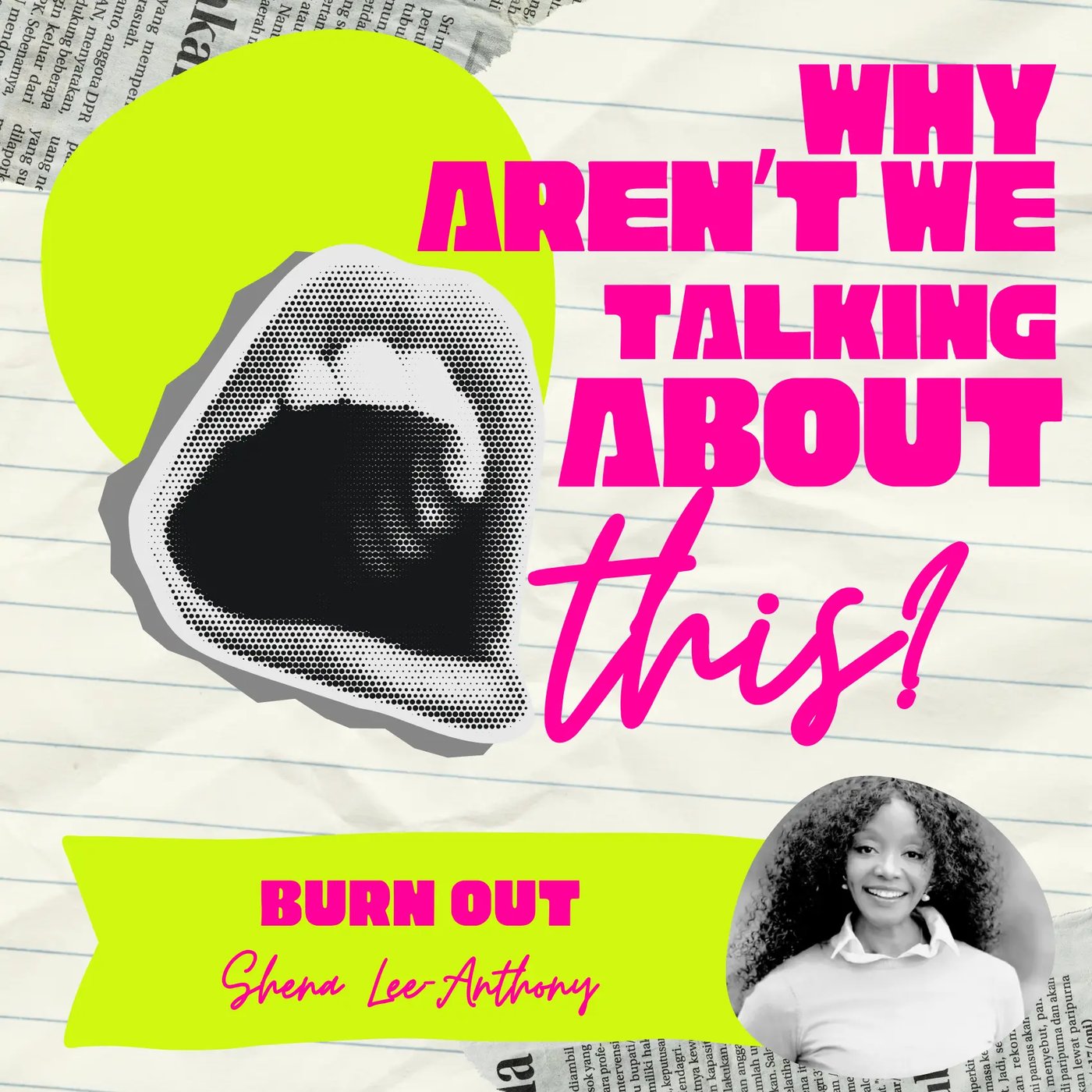
Why are the people who look most capable often the ones closest to falling apart?
Being resilient sounds like a compliment until being “the one who copes” makes admitting you aren't coping feel impossible. Rehabilitation physiotherapist and health coach Sheena explores the physiological reality of burnout, why you can't simply sleep it off and the conditioning that teaches us to carry far more than we should.
Core themes explored
- How resilience becomes a trap
- The physiological reality of burnout
- Why rest alone isn't always enough
- The conditioning that teaches us to carry too much
TranscriptRead +
Carly OsmanSo, Sheena, this is going to be a conversation that I've needed to hear many, many times in my life. But before we dive in, I'd love to know a little bit more about you and if you can share a bit more about your background and what got you into the space of burnout.
ShenaOkay, so i always loved people. And I have been a rehabilitation physiotherapist for going on 20 years. And I worked in the and NHS and stuff like that. And because of my own experience from burnout, I had to make work very differently. So i started my own rehabilitation company and then I retrained as a health and wellness coach. And that's where I became exposed or really, really understood about how stress and the way we operate affect our body and how the way we're living affect our body and is driving no more of us to become burnout.
ShenaOkay.
Carly OsmanOkay, so my first question, we're going to go in deep. So we hear the term burnout all the time. It's in the vocabulary. Everyone's like, oh, I'm burnt out. I feel I'm in the process. I'm on the brink of burning out. What does it actually mean? And how is it different from just feeling a bit stressed or tired?
ShenaSo I think often, Carly, that the but the word burnout is the new but buzzword. Everybody's saying it. You know, but with feeling tired or stressed, you can come away from the situation. You can rest. You can reset. Feel better and go again. Yeah. And with feeling stressed, there's cortisol and all of that. But the issue with burnout is when that stress becomes chronic. So you're in a heightened stress state for a very, very prolonged time. So there is never any reset. Even if you come away from the situation because your cortisol levels are already so high, you know there's no there's no opportunity to reset when you're in that state. And then it becomes physiological. So there's a physiological process that happens where And at the center of that is something called the HPA axis, which your brain senses that you are in a heightened state of stress. Your pituitary gland transmits those signals to the body. Your adrenal gland then dumps cortisol. And then that is what that system becomes dysregulated. And then all your other systems are affected. Your circadian rhythm. So all your energy systems, your digestive system, your hormone systems, and all of that. This is what's going on in the body when people then feel. And because the HPA system becomes so dysregulated, you know, cortisol becomes dysregulated. So it's not that you have, it's not only that you've got too much cortisol, but the cortisol levels are all over the place, so to speak, right? so I guess we can get into it a little bit more when we speak about the physiology a bit more. So I'm not going to explain too much. But what happens is that cortisol levels should be lower. It should be higher in the morning to wake us up because we do need some amount of stress, okay, to wake us up and to keep us alert and to help us to function on the high pressure situations. But in burnout, people aren't only on a high level. you get the lows as well because that HPA axis is dysregulated. So sometimes when your cortisol level should be up like in the morning to get you up because they're dysregulated, they're too low. And so you get low, you feel exhausted and your energy systems and all of that is completely upside down. That's a very, very basic way of looking at it.
Carly OsmanSo that's pretty interesting what you said about it's not something you can just sleep off. or I'm going to have an early night tonight. It's messing with your complete system. And i'm I'm thinking about my life and I think I've been burnt out twice and both those situations, I've just felt incapacitated. I was just in this point where I felt like a a vessel and I was kind of floating and my mind was racing and it just felt, and there was nothing I can do. Is that kind of the usual symptoms? And I know you've experienced burnout. So what did that look like for you? Was it a similar?
ShenaMy burnout. So for some people, you know, there's this is goodest thing that burnout creeps in. And yes, that's what's actually happening in the body. but you you experience it very differently. Everyone experiences their burnout very differently. And for me, my burnout wasn't a gradual coming on. Although the signals were there, my burnout was a big crash. So at the time it happened, I was going through a divorce. I had two young boys to look after. And the elder of the two, he had a neurological condition called intracranial hypertension. So he was quite poorly. And initially, the doctors weren't sure what was wrong with him. But he had a few episodes in and out of hospital. And so because I had a poor child, I had to take some reduced hours from work. But then i was pressured into going back to work full time. or as I would have lost my job. So I'm caring for an ill child, navigating getting divorced, going to work in a senior position, going to work all day, then in the hospital all night, back to work in a hospital again all day. And I repeated that over a number of months. And I still had a young and a younger son to look after. And of course, there are times when I felt tired, but you breathe to the back of your mind, you know. And I convinced myself that I was coping. Because me, Sheena, I've got this, right? That's the attitude. and you go into... I think for a long time I was living in survival mode at that point, you know, because I have to get through this divorce. I've got to keep the roof over our heads. I've got to keep my boys in the same kind of lifestyle that they were accustomed to when they had two parents living together. They're not going to miss out on anything, you know, and I'm going to hold on my job and I'm not going to be that woman who can't cope. Okay. And I pushed, to pushed, pushed. And of course there were days that I felt tired, but I just said made an excuse, you know, and ill I'll, you know, when when when he came when he comes out of hospital, I'll have a day off with him and I'll feel better. That went on for a couple of months. And one day came home from work and I felt extremely tired. i remember it so much, just like if someone had hit me with a tranquilizer. and I laid in the sofa and I thought, okay, I'll just, I'll just, I'll just shut my eyes for 10 minutes, you know, and then I'll get up and I'll be fine. A couple of hours passed and the boys were asking me for their dinner. Tried to get up, still couldn't get up. I just felt so exhausted. And I said to them, okay, you know, gave them instructions as to how to, you know, make their own dinner and stuff like that. Bedtime, still couldn't get up. And all this time, I'm just, I'm still convincing myself I'm just really exhausted. I just need a good sleep. So I said to them, go upstairs and I'll come up and kiss you goodnight in a little while. Owls passed, Carly. And I could not move. Still convincing myself. Just sleep, Sheena. Just be forget about everything. go to sleep and you'll be fine in the morning and you can start again. Night turned to day and a Desperately needed to go to the toilet. And I couldn't move. So i ended up rolling onto the floor, trying to get to the toilet and didn't make it. My body just completely shut down. And or my medical tests were fine. They couldn't find anything wrong with me. Eventually, that one doctor diagnosed me as having chronic fatigue syndrome, but it didn't really, my symptoms, my presentation, it really fit the clinical symptoms for chronic fatigue syndrome in entirety. But what it is, looking back now, after studying and understanding about burnout, realized that was a severe, severe case of burnout. And it needn't have happened if I was honest.
Carly OsmanSo what did you need to be honest about? Was it symptoms along the way that you just brushed off or or was it something else?
ShenaI needed to be honest about not coping. I needed to be honest about the amount of stress that I knew that I was carrying was too much for me. I needed to be honest to say, I need some help.
Carly OsmanSo why don't, why didn't you ask for help?
ShenaConditioning. Conditioning. And many high-functioning women get into that habit of, you know, very, very capable, being very capable. And that's not something that only happens when you are an adult. Often it starts from childhood, where either people put that label on you, that you're so capable, you're such a resilient person and over time you accept that badge and that's the way you function. or you may have come from an adverse situation and you're determined to get out of it. So you're forced to be really, really resilient and not be a quitter. And therefore, you get, you know, when you're older, you're in a position where you are in control of your own destiny and you function like that because I'm not going to quit. I'm not going back into that situation that I've come out come out of. And i think there's also, well, for me, definitely, and many, many women that I speak to, what comes out is that there is so much shame attached to not being able to cope when you've already accepted that label of being so resilient, she's got it all together, you know, and then the reality is you're really not coping. How many people are you disappointing? You know, people who rely on you, you know, how can I let that image slip? Because if I do, who am I? You know, and there is a, well, with me, I remember that they they it the shame that's associated and the grief of realizing, actually, I'm really not the superwoman that I've convinced myself that I am. I am human and my body breaks. and i am partly responsible because I wasn't honest and because I didn't listen. to my body telling me that something is wrong. that there they There is also the situation where sometimes we are in situations where we can't slow down. which We just have to function. If you're looking after children, you know, children are dependent on you you, know, and you don't want to let your kids down. you just keep on pushing through, pushing through, pushing through because they are the priority. you know But I got to a point where, although my boys were my priority, I could no longer look after them well because I had become so unwell myself.
Carly OsmanThere is so much of what you're saying that I'm recognising in myself and it's that I've been conditioned and I've labelled it and there's a lot, to your point, a lot of myself doing. I've got this, I don't need anything, I don't need anything from anyone, I'm capable and competent and I can do it. So asking for help for me is a really, really hard thing to do. But I do want to talk to you about the symptoms and the signs that were leading up to that point. So What were the little things that you were ignoring before you got onto that sofa and you'd reach peak burnout? What were the things that looking back, you've now gone, okay, my body was telling me this. I wasn't doing that. That had changed. What were those things?
ShenaSo things like feeling really tired. feel tired, but I'm going to bed I'm still wired. I can't settle down. and Sometimes there's feeling really stressed, feeling just unusually stressed. So for example, i remember one afternoon the boys were playing And me thinking, why are they laughing? I don't want them to laugh.
Carly OsmanThank you.
ShenaIt That was so unusual for me. Yeah, but it's because i was become I was getting to a point where my stress levels were so high. and Feeling... and I was going to say felt feeling very dysregulated. And I suppose it's it's very different for everybody, but just the the biggest thing for me was just never feeling like if I had any sleep at all, even though I would put myself to bed and waking up and not feeling rested and the irritability. But you just put that down to feeling stressed.
Carly OsmanDo you think your personality kind of changed as well? So you were to the point if you were being, don't want to use the word triggered, hate the word, but you were being annoyed by laughter. Every time we've met, you're a vibrant, full of character person. i can't imagine you ever being like that. do you Were signs of your personality changing?
ShenaThat's an interesting way of put phrasing it. But looking back on it, I definitely wasn't myself. that there was There was none of this. there was there was there There was no, what I call, there was no living in the gold.
ShenaRight? But then in a situation where you've got so much going on, you find excuses. you you you just There's always a reason other than admitting that you're not coping. You know, oh, I'm just so stressed because I don't want to give my husband my house. You know, oh, I feel overwhelmed because I don't know what's wrong with my son. You know, the doctors are telling me, might be this, this, this, is this what is it, you know? and Or how am I going to function, you know, going to work full on full-time hours and having to have someone care for him and I should be there. So there's a there was always another reason why i was why I thought I was feeling the way that I did. So yes, my emotions were quite dysregulated. But of course, I never put it down. i never i would never would have admitted to the fact that that was happening because I wasn't coping. And it's the it's when it's when we're not coping and our stress levels become so high, cortisol levels become so high and become dysregulated that that we then become burnout.
Carly OsmanYeah. I'd love to talk a little bit more about those, physiological components. So we touched on them at the beginning. What is actually happening with our body? You've talked about cortisol a bit and the other hormone is AMA, AMA, AMH. No, I think that's the fertility one, but one, that never made me the wrong one.
ShenaAnd tell you
Carly OsmanBut what What's happening in our bodies when it happens and what is causing it to shut down?
ShenaOkay, so I'm going to try and it it can get quite complicated and i and I get quite excited speaking about it now that I understand it more, but I'll try and keep it simple. So we have a our stress response system within the body, right? So it's our brain body stress communication system called the HPA access. So your hypothalamic, pituitary, adrenal, access. So the hypotalamus in the brain picks up that we are so stressed, sends the signal to your pituitary gland which then passes that signal onto to the adrenal gland. The adrenal gland dumps cortisol into the body. You have So it cortisol itself is not an issue because we need it, as I said earlier, to help us wake up in the morning, to stay alert, you know, out of danger and to function on the high pressure situations. But when you have so much in the body, you then start your systems like your circadian rhythm, I don't if you understand what the circadian rhythm is, but that's like your sleep, your sleep-wake cycle is dysregulated. Your energy systems are dysregulated. Your hormone systems are dysregulated. So when your circadian rhythm is dysregulated, you try to sleep. So you have cortisol in the body, High levels of cortisol inhibits your melatonin and your melatonin is your sleep hormone. So if you have high levels of cortisol, you don't have enough melatonin. So therefore you go to bed. so your melatonin should be high in the in the in the at at night and your cortisol level lower at night. That's dysregulated. So you go to bed, wake up, you can't sleep, you wake up tired, exhausted. If you're not sleeping well, your energy systems are dis decidedly depleted as well. And then your parasympathetic system them is also, the function of your parasympathetic system is also reduced. So that's a parasympathetic system controls things like your heart rate, your breathing weight, your nutrition, your emotions, and so on. and when that is dysregulated, your emotions are all over the place as well. this this Does that make any sense?
Carly OsmanYeah, that makes a lot of sense. So it's all kind of interlinked is what I'm hearing.
ShenaIt's absolutely interlinked, absolutely interlinked. And this is why of often said to people that having having removing yourself from the situation for a day going to this path for a weekend, you may feel good that you went, you may feel a little bit elated at the time, but that doesn't change that chronic stress process that is affecting so much of your physiological systems. You need to rebuild that because if your, if your parasympathetic system is so dysregulated, You know, your energy levels are off. Your digestion is affected. You're not going to be nourishing yourself very well. And it becomes a loop. You don't sleep well. You don't have the energy. You're not eating well. You don't have the energy to function.
Carly OsmanSo how do you get out of the cycle? So you spent a lot of time working with really, really successful people and high, high functioning, just brilliant people who've come to you and they've gone, something's not right. How do you take them out of that burnout state and bring them and and adjust and readjust all those systems so they're functioning properly? What what do you do?
ShenaSo first of all, it takes time. it takes time. it's It's never a quick fix. And if someone, I mean, there are different stages of burnout. And most most people who I see, not as severe as I am, but they they are in the state of burnout that they can't function very well in their life and so on. And they've said, I need help. And one of the things that we do, first of all, is to is to look at what else is going on in their life because burnout is not just about work. yeah That may have been where it started, but life also impacts how we burn out.
Carly OsmanThank you.
ShenaSo we look at their life, look at their whole life and find out what are the elements in their life that's contributing to their stress levels. And I encourage, so the first thing when someone comes to me, but even before looking at that, is we have an honest conversation. How do you really feel? I'm not speaking about them telling me the image that they've worn.
Carly OsmanThank you.
ShenaHow are you really feeling? How are you feeling about the things that that are going on in your life? So we have a look at that. And then one of the things that's really, really important, because It's easy to tell someone, okay, you need to get nine hours of sleep. But like we already spoke about, if the system is dysregulated, it's very difficult to then, even though you have the intention of of getting eight, nine hours of sleep, it's not going to happen. i think So we we then find ways to calm the nervous system. Making that person feel very, very safe within their body. That may look like breathing control exercises. That may look like sensory stimulation. You know, so things like and so something as simple as sitting and listening, feeling your breath, feeling the different changes so that they can come out of that work-driven thought process. come out of themselves, stop and just focus on a pleasurable, could be something pleasurable sensation that they're experiencing right now. And there's, because many high functioning women are accustomed to being on, on, on all the time, you know, how how many times in the day are they able to just sit switch off and go into a place where they don't have to think about doing something for somebody else. Okay. So it's about finding ways to regulate the nervous system and for everybody that's different. So rest, I find out what rest means to them, truly means to them because there's some people rest, meaning staying still is uncomfortable. And that wouldn't work for them. Okay. so yeah So I bring them to a place where they feel comfortable resting. It may just be sitting, for some people, just sitting with a warm cup of tea. For some people, they need to dance, move their body, release the tension. So for some people, it's active rest. Some people, it's still rest. So that's the other thing. And then we look at your diet because you need you cannot recover from burnout if you don't pay attention to your nutrition. Okay, and many high-functional women, particularly you know if you're a female founder or you're launching you're in launch mode, you're eating on the go, right? You don't have time. So we look at what's happening in terms of your nutrition. Are you having in enough protein in your diet? Are you having enough green leafy vegetables to get your trace minerals? Or are you stuffing yourself with lots of highly processed foods? So we look at all of that.
Carly OsmanAgain, what it is, what I'm hearing is, again, everything is so interlinked. It's just you have to look at the full picture. And then for someone who, at the moment, i'm fair I feel fairly regulated.
ShenaYou have to look at the whole picture.
Carly OsmanI'm conscious about what I'm eating, how much I'm moving, and making sure that I'm putting my body in the best place it can be. But there are there any other things that I can do to avoid burnout?
ShenaOkay, yes, so pacing yourself is so important. One of the things I often say is nothing in our lives, except it's a life and death situation, is not an emergency. We condition ourselves, if you're high functioning, you condition yourself to thinking I've got to do this now and I've got to do this so intensely because I've got to get it right. It's not an emergency. Okay. And looking at the reasons that drive us to operate the way that we do. So some of the reasons that drive us to behave like this, you know, as I said, it stems from childhood experiences and so on. It's, are you people pleaser? Are you doing something just because you're trying to make someone else happy at your own expense? Do you have to do this thing that perfectly? Or is the 20% enough? Does it go in your 80% box? Did you have to be perfect at 80% of everything? Or is it your 20%? You know, 80-20%. alone Yeah, looking at that. We're going to have I've lost my plan of thought, cary sorry.
Carly OsmanYeah. So I feel at the moment I'm in a pretty good place. I feel that I'm looking after my body nutritionally. I'm doing a lots of exercise. I feel quite grounded, but that's not the reality for a lot of my time. So what can I be doing apart from eating well and exercising to make sure that I'm not on a path to burnout?
ShenaOkay, so one of the most important things is to pace oneself. One of the things I always often say to my ladies that i work with is most things in our life, not an emergency. Okay, you don't have to do everything right now. So, and and also looking at what drives us to behave the way we do. Are you a people pleaser? Are you doing something because you really want to do it? Or because you're you're trying to make someone like you? oh you know, you don't want to disappoint someone, but it goes against what you really want to do. So that's one thing. Are you hyper-functioning? Managing everything? Are you taking on all responsibilities for everybody else. So a lot of times it's the way that we, our own selves operate that puts us in a position of becoming burnout. And that's a really, really good way to start, to look at, it <unk>m sorry, to look at those traits that we have that cause us to be stressed.
Carly OsmanI'm smiling because I'm a hyper perfectionist, also with strong people pleasing tendencies. So often in the two instances that i have been burnt out, it's because I've tried to jump on everything, perform at the highest standard that I possibly could be, take on everything and not give myself any break or any rest or anything to support me in doing that.
ShenaYeah, and for you, for you, what what does rest look like for you?
Carly OsmanSo rest for me is active.
ShenaI mean...
Carly OsmanAnd I really love that you fact you so you talked about that, that it for me, if I sat in front of the TV and rested, I would, my mind would go everywhere. I would be an absolute anxious mess. However, if I'm out there pottering or wandering around a market, I'm moving, but I'm, that's where I have my meditative state. But it's also taken me a long time to realize that rest is an important part of life.
ShenaYeah.
Carly OsmanIt's not being lazy. It's not a cop out. It's not anything like that. It's actually the secret weapon for me being the best I can be.
ShenaI was just going to say you that rest is the element that gives our body what it needs to then function at high level. Because if you don't rest whatever way you decide that suits you to rest, there's no reset in the body. And you just keep going and go pushing through until you crash.
Carly OsmanYeah yeah so if anyone's listening here and they're going oh i'm on a path to burnout i can start feeling my body quickening my heart rate i'm i'm just that i'm massively off kilter what is the first thing that they need to do how can they find you how can they get into one actually do something about this before the point of breaking themselves
ShenaCase in point. The first thing that I would say is be honest. I know it doesn't sound like anything scientific, but it is true. Be honest about the amount of load that you're carrying. Be honest about not coping and reach out for help. okay Okay, have an honest look about at the things in your own self. And this is not about blaming anyone for their burnout, but it's just about understanding that their ways of operating that we have. For example, if we're not living within our own value system, it's it causes stress because you're never settled with a decision that you made if it's so far against your values, okay? So be honest, do I really want to stay in this role? I truly happy long-term in this role? And if you don't have a look at that, you stay in that role. The situation becomes more and more and more stressful and then you become burned out. Okay, whereas maybe if you look at that situation and think, actually, this doesn't really align with my values. What else can I do in that place? Because there's one lady I was seeing, and she'd been in this really, really high power position for a very long time. And we had a look at values and she was really taken aback that the workplace, the work environment, it didn't align with any of her values at all, any of her top 10 values. And she eventually made made a decision to have an ordered exit out of that role to do something else that she's happy with. And she is a lot happier. Stress levels come down and she's doing brilliantly. So this is what I was talking about. Why is stress being honest about your situation and about the way that one functions? Because that that in itself really helps to reduce the amount of stress that we're carrying.
Carly OsmanAmazing. Thank you, Sheena, so much.
ShenaAnd to plan and end And also to plan time. Plan time for your own self in the midst of everything else that's going on. Every day, find something to do just for your own self. Even if it's five or ten minutes, create that space where you can look after your own self.
Carly OsmanWonderful advice. Thank you so much.
ShenaThank you. Thanks for having me.